
Utility Trenching
Underground Lines Installed Without Disrupting Active Properties
Utility Trenching in Dallas-Fort Worth, TX and Niagara Falls, Buffalo, Orchard Park, NY for electric, water, gas, sewer, septic, and telecommunications line installations serving new construction, infrastructure upgrades, and secondary service runs
Precision trenching excavates narrow, code-compliant pathways for underground utilities, connecting new residential builds to municipal services, running secondary lines to detached outbuildings, or upgrading aging infrastructure on commercial properties. The work requires exact depth control, safe clearance from existing utilities, and proper bedding material to protect cables and pipes from shifting soil. Dallas-Fort Worth's rapid growth in Prosper and Celina drives demand for raw land utility tie-ins, while established areas in Plano, Irving, Frisco, and McKinney require service upgrades, telecommunications expansions, and new lines to accessory structures like workshops, guest houses, or detached garages.
Excavation Pros operates trenching equipment that cuts clean pathways at engineered depths, avoiding damage to existing utilities through advance locates and careful excavation near marked lines. The process includes bedding installation to cushion pipes and cables, backfill compaction to prevent settling, and surface restoration to match surrounding grade. Custom home builders, commercial contractors, and utility companies rely on this service when infrastructure must be installed on schedule without disrupting adjacent properties or active jobsites.
Arrange a site consultation to review utility routing, confirm depth requirements, and request a custom utility trenching quote tailored to your project's specifications.
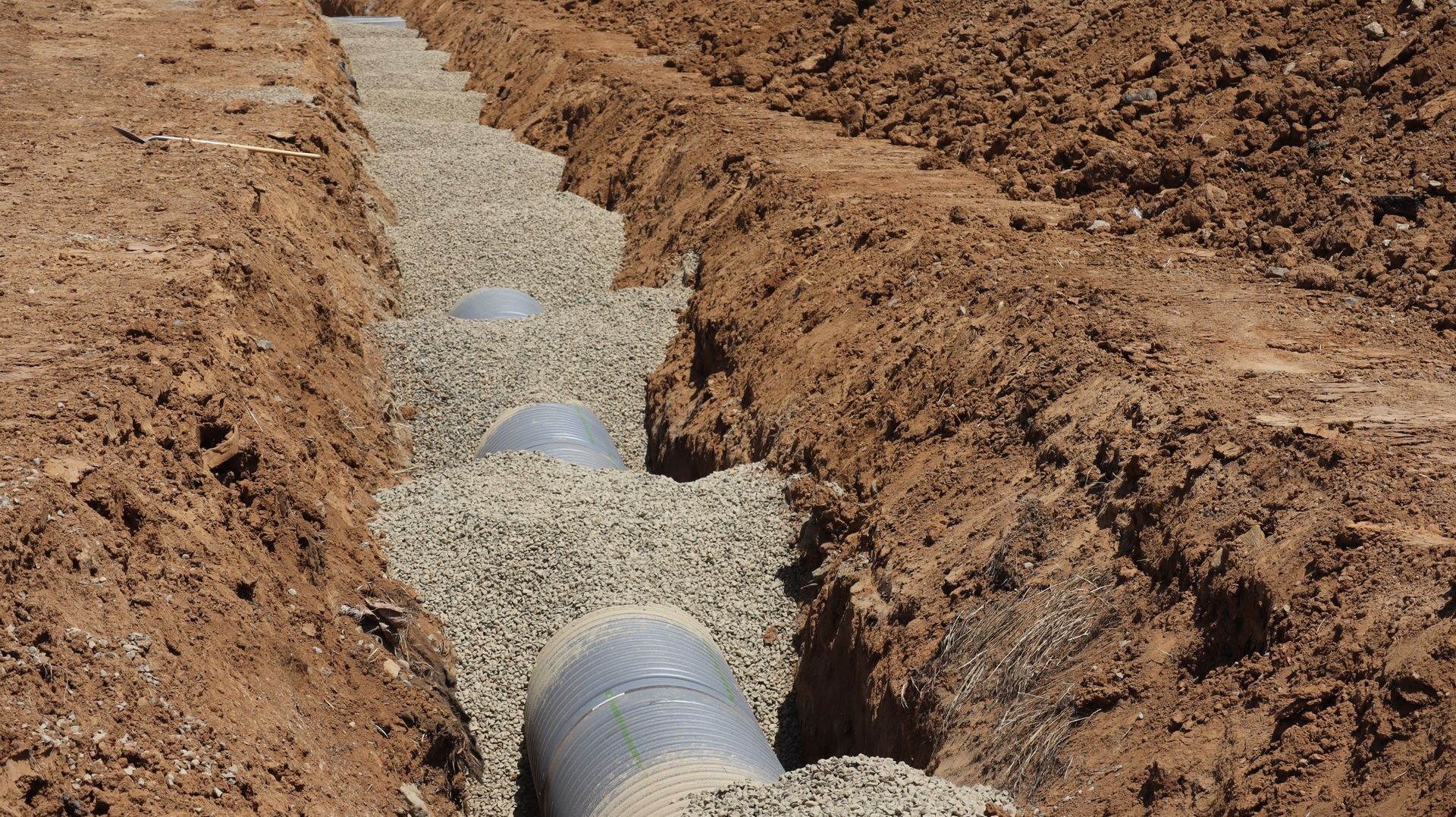
How Code-Compliant Trenching Protects Underground Infrastructure
Before excavation begins, utility locates identify existing underground lines—electric, gas, water, sewer, and telecommunications—marking their positions to prevent accidental strikes during trenching. Equipment cuts trenches to specified widths and depths based on the utility type: electric conduit typically requires 24 inches of cover, water lines 30 inches, and sewer 36 inches or more depending on municipal codes. Bedding material like sand or fine gravel is placed beneath pipes and conduits to provide stable support and prevent point loading from surrounding soil. After utilities are laid, backfill is added in compacted layers to avoid voids that would cause surface settling or line shifting over time.
Once trenching completes, new utility lines function safely underground without risk of frost heaving, vehicular load damage, or accidental exposure during future landscaping work. Properties gain access to needed services—electricity for detached structures, water for irrigation zones, gas for outdoor kitchens, or fiber optic lines for high-speed connectivity—without visible overhead lines or surface-mounted conduits. Excavation Pros coordinates with utility providers and inspectors to ensure installations meet Dallas-Fort Worth municipal standards before trenches are closed and surfaces restored.
The service includes trench excavation, bedding installation, and compacted backfill, but excludes utility materials, line installation by licensed tradespeople, and final connections requiring permits held by electricians, plumbers, or telecommunications contractors. Surface restoration returns disturbed areas to grade but does not include landscaping, sod replacement, or hardscape reconstruction unless specified in project agreements.
Questions Before Starting Utility Trenching Projects
Property owners and contractors often ask about coordination with utility providers, depth requirements, and how trenching integrates with other construction phases before projects begin.
- What depth is required for different utility types? Electric conduit typically requires 24 inches of cover under most Dallas-Fort Worth codes, water lines 30 inches to prevent freezing during rare hard freezes, natural gas 24 inches, and sewer lines 36 inches or deeper depending on slope requirements and connection points. Telecommunications and fiber optic lines often trench at 18 to 24 inches.
- How are existing utilities located before trenching begins? Texas law requires 811 locates before any excavation, triggering utility companies to mark buried lines with flags or paint. Private locates may be necessary for service laterals, irrigation systems, or lines not covered by public utility marking services, especially on custom home sites in Prosper and Celina with older or incomplete records.
- What happens if a trench crosses driveways or paved areas? Trenches under concrete or asphalt require saw cutting to create clean edges, excavation to required depth, utility installation, compacted backfill, and pavement restoration. Temporary steel plates may cover open trenches in active driveways or commercial lots to maintain access during multi-day projects.
- How long does utility trenching take for a typical residential project? A straightforward residential trench—such as running electric to a detached garage 100 feet from the main panel—takes one to two days including excavation, bedding, backfill, and surface grading. Complex projects crossing multiple utilities, requiring deeper depths, or navigating congested jobsites extend timelines based on coordination with other trades.
- Who handles the actual utility line installation inside the trench? Licensed electricians install conduit and wiring, plumbers run water and sewer lines, gas contractors handle natural gas piping, and telecommunications providers place fiber or coaxial cable. Excavation Pros provides the trench and bedding; line installation and final connections are completed by trade-specific contractors holding appropriate permits.
Excavation Pros coordinates with utility providers, inspectors, and trade contractors to ensure trenching aligns with project schedules and meets Dallas-Fort Worth code requirements for depth, bedding, and backfill compaction. Schedule a site visit to map utility routes, confirm service connection points, and receive a detailed trenching proposal tailored to your residential, commercial, or infrastructure project across the Dallas-Fort Worth region.