
Grading Services
Foundations Protected by Proper Slope and Drainage
We offer site preparation services and for raw land pad preparation, yard slope correction, and erosion control tailored to local clay soil conditions in Niagara Falls, Buffalo, Orchard Park, NY
Dallas-Fort Worth clay soil expands when saturated and contracts during dry periods, creating foundation movement and water pooling near structures if yard slopes direct runoff toward buildings instead of away. Grading services adjust surface elevations to control water flow, prepare raw lots for construction pads, and correct existing yards that trap moisture against foundation walls. This work matters most for custom home builders preparing undeveloped lots in Prosper and Celina, and for established homeowners in Plano, Irving, McKinney, and Frisco dealing with standing water or uneven terrain.
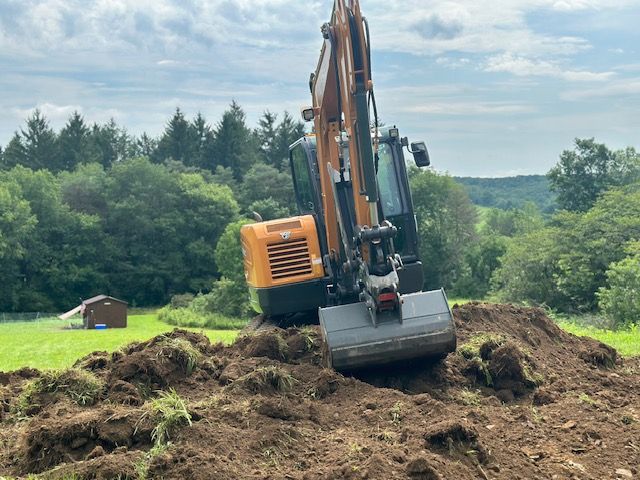
Excavation Pros operates grading equipment that reshapes land to engineered slopes, ensuring water moves away from foundations at a minimum two-percent grade. The process involves stripping topsoil, cutting high areas, filling low spots with compacted material, and reestablishing finished elevations that support landscaping or hardscaping. For raw land, pad site preparation includes clearing vegetation, establishing building footprints, and creating access routes for construction equipment.
Schedule a site evaluation to measure existing slopes, identify drainage problems, and request a custom grading quote.
What Proper Grading Requires
The work begins with a site survey to document current elevations, drainage patterns, and areas where water collects or flows incorrectly. Heavy equipment cuts soil from elevated zones and relocates it to depressions, shaping the surface to direct runoff toward street drains, swales, or designated discharge points. Compaction equipment consolidates fill material in layers, preventing future settling that would recreate low spots or cause foundation gaps. For raw lots, the final pad sits level for slab pours or pier-and-beam systems, with perimeter grading sloped outward to protect future foundations.
After grading completes, water no longer pools near foundations during storms, yard surfaces drain within hours instead of days, and erosion stops occurring along property edges or slopes. Custom home builders receive building-ready pads that meet engineering specs, while existing homeowners notice dryer crawl spaces, reduced foundation stress, and landscapes that support healthy plant growth instead of waterlogged zones.
The service includes fine grading for yard finish work but excludes hardscape installation, landscaping, or irrigation system adjustments. Erosion control measures like silt fencing or sediment barriers are added when slopes exceed thresholds or when properties border drainage easements.
Questions Before Scheduling Grading Work
Property owners and contractors often ask about timing, soil handling, and how grading integrates with other site improvements before projects begin.
- What causes yards to slope incorrectly toward homes? Original construction sometimes prioritizes speed over drainage precision, or soil settles unevenly over time as clay expands and contracts. Additions, landscaping changes, or erosion from neighboring lots also redirect water flow toward foundations instead of away.
- How does clay soil affect grading in Dallas-Fort Worth? Blackland clay requires careful moisture management during grading because it becomes sticky and unworkable when wet, or rock-hard when dry. Proper compaction in layers prevents future settling, and final slopes must account for clay's tendency to hold water longer than sandy or loamy soils.
- What happens to existing topsoil during grading? Topsoil is typically stripped and stockpiled on-site before heavy equipment reshapes subgrade elevations. After final grading, topsoil is redistributed across yard surfaces to support landscaping, though additional material may be needed if original depths were shallow.
- How long does grading take for a typical residential yard? A standard single-family lot requiring slope correction and drainage improvements usually takes one to three days, depending on equipment access, soil conditions, and whether fill material needs importing. Raw land pad preparation timelines vary based on lot size and clearing requirements.
- What permits are required for grading work? Most residential slope corrections under two feet of elevation change do not require permits, but raw land development, commercial pads, or work near drainage easements in Plano, Irving, Prosper, Celina, McKinney, and Frisco often trigger municipal review and grading plan approvals.
Excavation Pros handles grading for both new construction and remedial drainage projects, adjusting equipment and methodology based on site conditions and project scope. Contact the team to arrange a site consultation and receive a detailed grading proposal tailored to your property's current elevations and drainage needs..