
Pool Removal & Demolition
Reclaimed Yard Space and Eliminated Maintenance Costs
Pool Removal & Demolition in Dallas-Fort Worth, TX and Niagara Falls, Buffalo, Orchard Park, NY for homeowners and investors removing aging inground pools, tearing down detached structures, and preparing lots for new construction
Aging or unused inground swimming pools consume yard space, require constant chemical and mechanical maintenance, and reduce property appeal for buyers who see pools as liabilities rather than assets. Pool removal and demolition services dismantle these structures, execute engineered backfill with compacted soil, and restore usable yard area for landscaping, patios, or future construction. The work also extends to detached garages, barns, sheds, and outbuildings that no longer serve functional purposes or obstruct redevelopment plans. Excavation Pros handles these projects across Dallas-Fort Worth, serving residential clients in Plano, Irving, Prosper, Celina, McKinney, and Frisco who want to reclaim property or prepare lots for resale and new builds.
The process begins by draining pools, disconnecting utilities, and breaking concrete shells with hydraulic equipment. Debris is sorted—rebar and metal components are separated for recycling, while concrete is crushed on-site or hauled for disposal. The resulting cavity is backfilled with compacted soil in controlled lifts, preventing future settling that would create depressions or undermine new landscaping.
Arrange a site evaluation to assess removal complexity and request a custom pool removal or demolition quote based on structure size and site access..
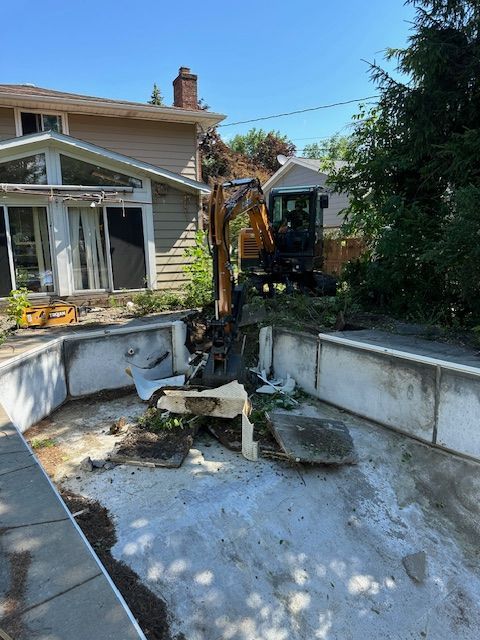
What Full Removal and Engineered Backfill Accomplish
Demolition equipment breaks pool shells into manageable sections, exposing plumbing lines and electrical conduits that must be capped or removed to code. For partial removals, the pool bottom remains in place with drainage holes punched to prevent underground water collection, though full removal eliminates all structural components and provides more stable backfill. Soil is added in layers, each compacted with vibratory equipment to match surrounding ground density and prevent settling over time.
After backfill completes, the former pool area supports new landscaping, patios, or lawn without visible depressions or soft spots where settling would occur. Yards gain hundreds of square feet of usable space, and properties appeal to buyers who prefer low-maintenance outdoor areas over pool upkeep. For detached structure demolition, cleared areas become available for parking expansion, accessory dwelling units, or open yard extensions, and lots meet zoning requirements for new construction without old buildings creating setback or code conflicts.
The service includes debris removal and site cleanup but excludes new landscaping installation or hardscape construction. Permits are handled as part of the demolition process, ensuring compliance with Dallas-Fort Worth municipal codes governing structure removal and fill compaction standards..
Answers to Frequent Demolition Questions
Homeowners and real estate investors often ask about project duration, cost factors, and what happens to the land after structures are removed.
- What determines whether a pool removal is partial or full? Partial removal leaves the pool bottom in place with holes for drainage, reducing cost and timeline but limiting future use of the area for structures requiring deep footings. Full removal eliminates all concrete and provides stable, buildable ground, preferred when future construction or complete land restoration is planned.
- How long does a typical pool removal take? A standard residential inground pool removal, including demolition, debris haul-off, and engineered backfill, takes three to five days depending on pool size, access for equipment, and whether utilities require complex disconnection. Detached structure demolition timelines vary based on building size and material type.
- What happens to the concrete and debris removed from the site? Concrete is crushed and recycled at approved facilities, metal components like rebar and piping are separated for scrap recycling, and non-recyclable debris is hauled to permitted disposal sites. Most projects in Dallas-Fort Worth divert 70 percent or more of demolition material from landfills through recycling.
- Can new landscaping or construction begin immediately after backfill? Engineered compaction allows landscaping and light structures like patios or decking to proceed soon after completion, but heavier structures requiring foundation work may need additional settling time or deeper soil stabilization depending on building department requirements in Plano, Irving, Prosper, Celina, McKinney, and Frisco.
- What permits are required for pool removal or building demolition? Pool removals typically require demolition permits and final inspections to verify proper backfill compaction and utility disconnection. Detached structure teardowns require similar permits, with additional reviews if structures are near property lines or contain hazardous materials like asbestos siding.
Excavation Pros coordinates permitting, utility disconnection, and debris recycling as part of the removal process, ensuring projects meet local codes and leave properties ready for their next use. Set up a site visit to discuss your pool or structure removal goals and receive a detailed proposal covering demolition, backfill, and site restoration specific to your Dallas-Fort Worth property.